

Ngagyur Kadag Institute

The Path to Awakening Through Cause, Interdependence, and Wisdom

Rooted in the authentic Buddhist lineage of Nyingma and Palyul, we share timeless teachings on the law of causality, interdependent origination, and the true nature of mind guiding practitioners toward clarity, compassion, and liberation.

Nyingma Lineage

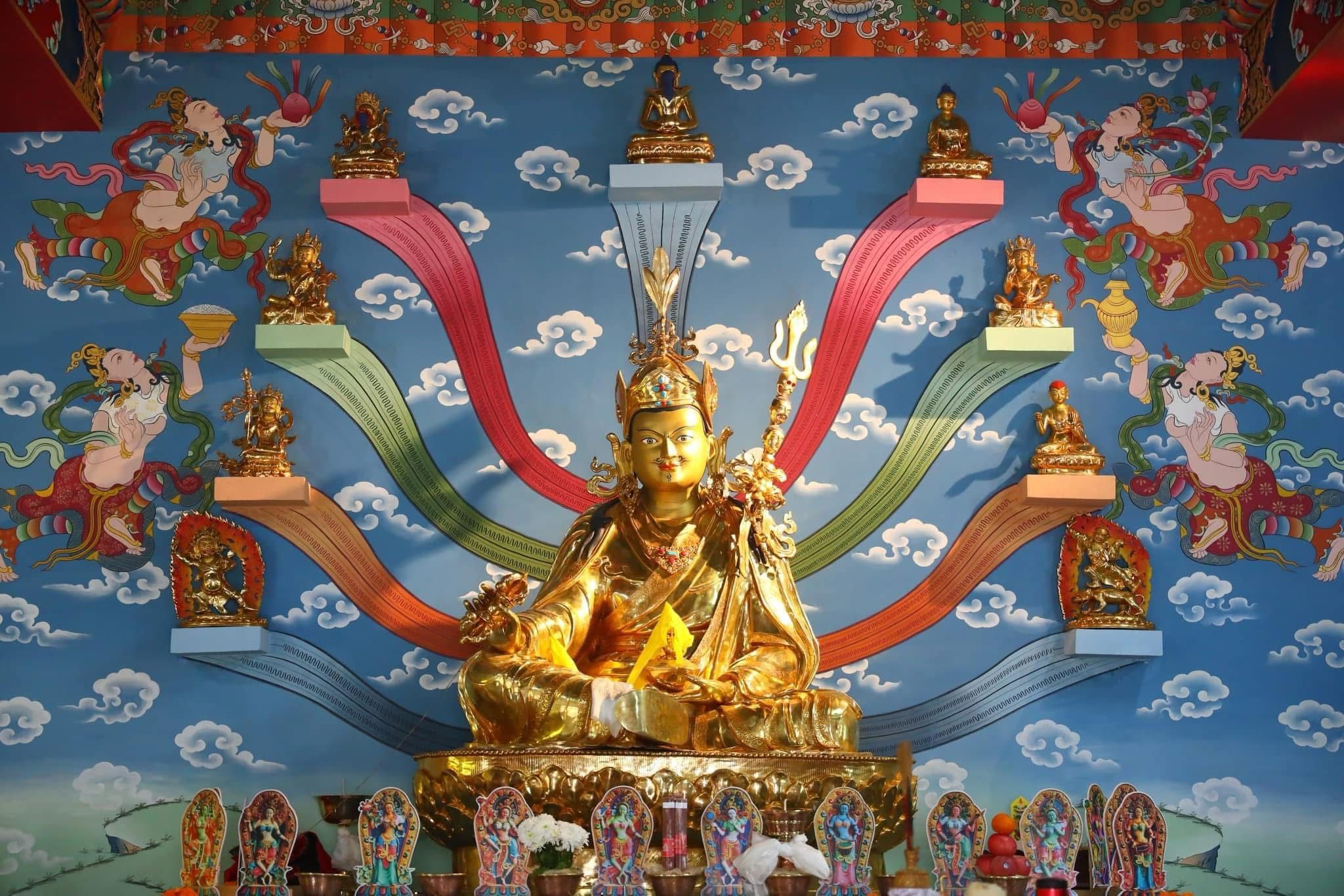
The Nyingma lineage, particularly the Dzogchen tradition, traces its origins to Buddha Samantabhadra and was transmitted to Garab Dorje. It continued through great Mahasiddhas such as Shri Singha, Jnanasutra, Vimalamitra, and Guru Padmasambhava.

Buddhism spread to Tibet and the Himalayan region in the 8th century when Tibet King Trisong Deutsen invited Shantarakshita from Nalanda University, India, Guru Padmasambhava from Pharping, Nepal to teach the Dharma. Under their guidance, a group of translators primarily Kawa Paltsek, Chokro Lui Gyaltsen, and Zhang Yeshe De including Vairotsana, translated the sacred texts of both sutra and tantra into Tibetan. These translations formed the foundation of the Nyingma tradition or Old translation.

Later, three other major Tibetan Buddhist schools Kagyu, Sakya, and Gelug emerged through newer translations and became known collectively as the Sarma traditions or New translation.

The Nyingma tradition outlines nine Yana (vehicles) of practice:

  1. Sravaka vaka Yana
  2. Pratyekabuddha Yana
  3. Maha yana
  4. Kriya Tantra Yana
  5. Carya Tantra Yana
  6. Yoga Tantra Yana
  7. Maha yoga Yana
  8. Anuyoga Yana
  9. Atiyoga Yana

Within the Nyingma tradition, there are six main Mother monasteries, each associated with a specific place, region, temperament, and unique treasure lineage. These are Dorjee Drak, Mindroling, Shechen, Dzogchen, Kathok, and Palyul!

Principles of Buddhism

Belief in the law of causality, as a foundational aspect of Buddhist teaching, and the philosophy of interdependent origination are crucial points. Ultimately, recognizing and acknowledging that all phenomena are empty by nature is essential. Selfishness is merely a reflection of life, akin to a dream, an optical illusion, a magical trick, an echo, a mirage, water bubbles, a manifestation, or the moon reflected in water. Strive to understand all phenomena in this way.

Law of Causality

The law of causality is a fundamental principle in Buddhism, stating that everything arises due to causes and conditions.

Interdependent Origination

Interdependent origination, or dependent arising, is the doctrine that all phenomena arise in dependence upon other phenomena.

Emptiness

Emptiness in Buddhism refers to the absence of inherent, independent existence in all phenomena.

Nature of Phenomena as Illusory

The comparison of phenomena to illusions, dreams, and other ephemeral images highlights the idea that what we perceive is not ultimately real or permanent.

Origin of Suffering

Suffering arises from craving (tanha) and desire. This craving leads to attachment to transient things, which inevitably results in suffering because everything is impermanent.

Marga

The path leading to the cessation of suffering is the Noble Eightfold Path.