

In 1959, a young Tibetan lama fled across the snow-covered Himalayas with roughly three hundred companions. Only thirty survived the perilous journey. Arriving in South India with just three hundred rupees in hand, that master—His Holiness the Third Drubwang Pema Norbu, revered worldwide as H.H. Penor Rinpoche (1932–2009)—laid the foundation for an extraordinary spiritual and institutional renaissance.
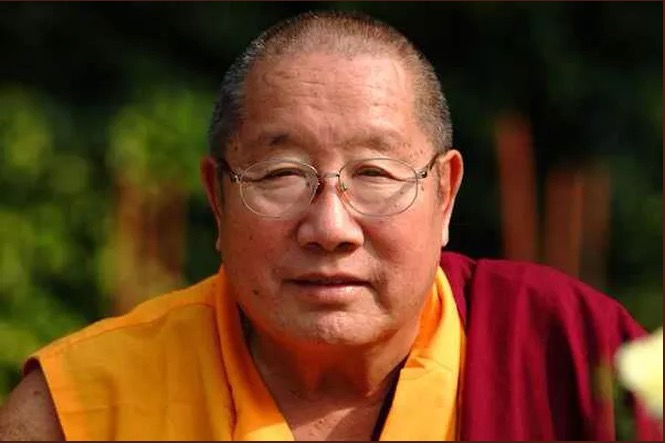
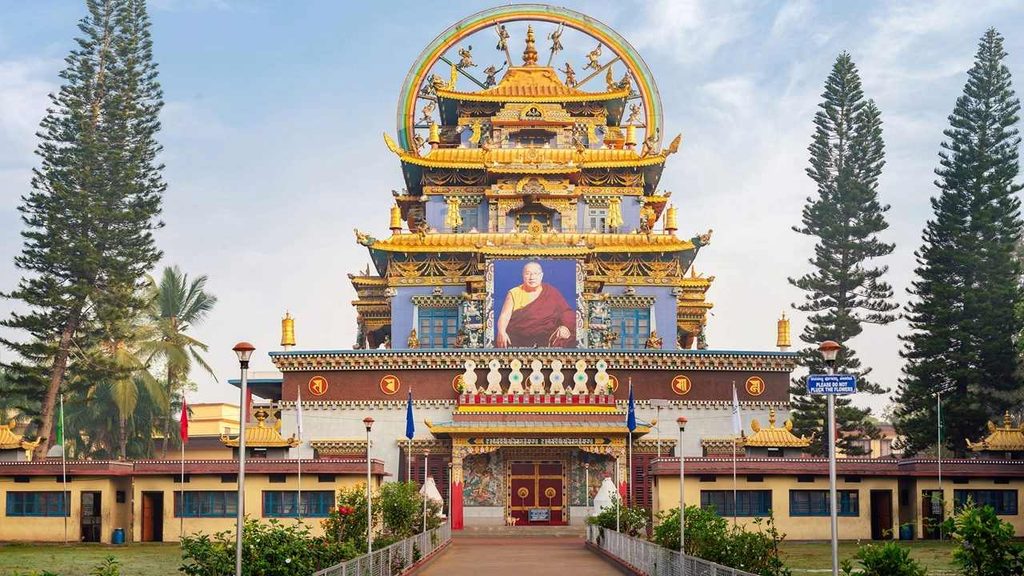
Over five decades in exile, H.H. Penor Rinpoche built Namdroling Monastery in Bylakuppe, Karnataka, home to the renowned Golden Temple and one of the largest Nyingma monastic centers in the world. Serving as the Eleventh Throne-Holder of the Palyul lineage and the Third Supreme Head of the Nyingma tradition of Tibetan Buddhism, he safeguarded ancient Dzogchen (Great Perfection) transmissions, established rigorous philosophical colleges for both monks and nuns, and rebuilt hundreds of devastated monasteries across Tibet and Nepal. At the same time, his international Dharma outreach sparked global discussion when he recognized Western practitioners as tulkus (reincarnate lamas).
Early Life in Kham and Training at Palyul Monastery
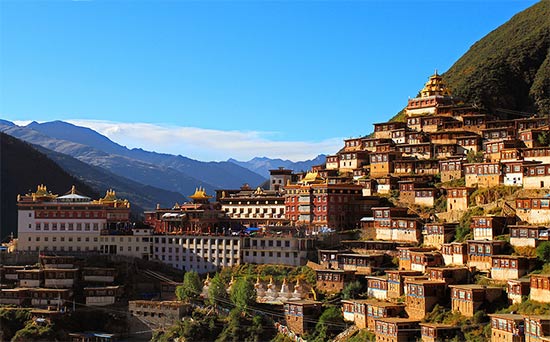
His Holiness Penor Rinpoche was born in the twelfth lunar month of 1932 in the Powo region of Kham, Eastern Tibet, to his father Sonam Gyurme and mother Dzom Kyi. According to traditional biographical accounts documented by The Treasury of Lives, his birth was accompanied by auspicious signs—including winter blossoms, vivid rainbows, and a distinct white Tibetan syllable Ah visible on the tip of his nose—fulfilling an earlier prophecy by the Fifth Dzogchen Rinpoche, Thubten Chökyi Dorje.
Shortly after his birth, independent search parties dispatched by the Fifth Dzogchen Rinpoche and the great scholar Khenchen Ngagi Wangpo arrived simultaneously at his family’s home. Both parties confirmed the young boy as the unmistakable reincarnation of the Second Drubwang Pema Norbu and an emanation of the eighth-century Indian master Vimalamitra, one of the principal founders of the Dzogchen lineage in Tibet.
In 1936, at the age of four, Penor Rinpoche entered Namgyal Jangchub Chöling, the mother monastery of the Palyul tradition in Kham. In 1943, he was formally enthroned as the Eleventh Palyul Throne-Holder by his root guru, the Second Chogtrul Rinpoche Thubten Chökyi Dawa, alongside the Fourth Karma Kuchen Rinpoche. Under their close guidance, he absorbed the complete transmission cycles of the Palyul tradition:
- Nyingma Kama: The continuous oral lineage of canonical tantric scriptures transmitted from master to disciple since the time of Guru Padmasambhava.
- Namchö (Space Treasure): The profound terma (hidden treasure) revelations of Terton Mingyur Dorje, central to Palyul contemplative practice.
- Dzogchen (Great Perfection): The pinnacle meditative instructions of the Nyingma school, including Tsa-lung (subtle-channel and wind practices), Trekchö (cutting through to primordial purity), and Tögal (direct crossing over).
By age seventeen, Penor Rinpoche had completed these foundational transmissions along with a strict four-year solitary meditation retreat. Following his full monastic ordination (bhikshu vows) in 1952, he assumed full spiritual and administrative leadership of Palyul Monastery in 1953 at just twenty-one years old.
The 1959 Exodus and the Founding of Namdroling Monastery
The late 1950s brought catastrophic upheaval to Eastern Tibet. Chinese military forces detained and tortured the Fourth Karma Kuchen Rinpoche—who passed away in custody in 1958—and systematically destroyed Palyul Monastery along with more than four hundred of its branch monasteries and retreat centers.
To preserve the unbroken lineage transmissions, Penor Rinpoche departed Kham in 1959. After enduring months of hardship in the humid lowlands of Assam, he resettled with displaced Tibetan refugees in Bylakuppe, Karnataka, in 1961—a settlement established through the coordination of the Government of India and the Central Tibetan Administration.
On July 31, 1963, Penor Rinpoche laid the foundation stone for a modest bamboo-and-thatch temple that would grow into Thegchog Namdrol Shedrub Dargyeling, universally known as Namdroling Monastery. Rather than directing construction from afar, Rinpoche worked side by side with his monks and local laborers, carrying stones, mixing mortar, and clearing forest land. His vision was clear: to build a self-sustaining monastic sanctuary offering free housing, nutritious meals, healthcare, and classical Buddhist education to impoverished students from Tibetan refugee settlements, Nepal, Bhutan, and remote Himalayan border regions.
Key Milestones in Namdroling’s Development
- 1962–1963: Establishment of the junior monastic school and the original bamboo temple in Bylakuppe.
- 1975: Opening of Geso Khang, a dedicated residence providing compassionate care for elderly monastics and lay elders.
- 1985: Inauguration of Samten Osel Ling, a traditional three-year, three-month solitary retreat center preserving intensive Palyul meditation lineages.
- 1999: Completion and consecration of the monumental Golden Temple (Padmasambhava Buddhist Vihara), housing towering gilded statues of Guru Padmasambhava, Buddha Shakyamuni, and Amitayus, inaugurated by His Holiness the 14th Dalai Lama.
- 2003: Opening of the Tsepal Topkyed Day Care Medical Center to serve both monastics and neighboring local communities.
- 2004: Consecration of the three-story Zangdog Palri Temple (Copper-Colored Mountain Palace of Guru Rinpoche), also inaugurated by His Holiness the 14th Dalai Lama.
By 2004, Namdroling had grown into a thriving spiritual community of roughly 4,000 monks and 800 nuns—exceeding 5,000 resident practitioners in total. Recognized today as a major cultural landmark by Karnataka Tourism, the monastery transformed the local rural economy and earned H.H. Penor Rinpoche a prestigious state National Award in 2005 for social and humanitarian service.
Transforming Nyingma Education and Nuns Scholarship
While monumental temples draw visitors from around the globe, H.H. Penor Rinpoche regarded living scholarship and disciplined practice as the true pillars of the Buddhadharma. His defining institutional achievement was standardizing higher Nyingma philosophical education in exile.
In 1978, he founded the Ngagyur Nyingma Institute, which rapidly emerged as the premier Nyingma shedra (monastic college) outside Tibet. Its rigorous nine-year curriculum immerses students in the classical Indian and Tibetan treatises—including Vinaya (monastic discipline), Madhyamaka (Middle Way philosophy), Pramana (valid cognition), Abhidharma (phenomenology), and the inner tantric commentaries of Longchenpa and Mipham Rinpoche. Over the decades, the institute has graduated more than 1,200 Lopon scholars (senior Dharma teachers) and 300 Khenpos (professors of Buddhist philosophy) who now teach across Asia, Europe, and North America.
Equally historic was Penor Rinpoche’s commitment to female monastics. Recognizing that nuns in traditional Tibetan society rarely received equal access to advanced philosophical training, he established Tsogyal Shedrub Dargyeling Nunnery in 1993 and the Ngagyur Nyingma Nunnery Institute in 1995. Through these institutions, over 800 nuns gained access to the exact same nine-year shedra curriculum, debate training, and academic credentials as their male counterparts—producing the first generation of fully credentialed female Loponmas and Khenmos in Nyingma history.
Supreme Head of the Nyingma Tradition and Global Outreach
Historically, the Nyingma school—the oldest of the four major traditions of Tibetan Buddhism—functioned through decentralized monastery networks rather than a single administrative office. In 1993, following the passing of His Holiness Dudjom Rinpoche and His Holiness Dilgo Khyentse Rinpoche, His Holiness the 14th Dalai Lama and senior lineage holders requested Penor Rinpoche to serve as the Third Supreme Head of the Nyingma Tradition.
He held this unifying responsibility until stepping down in 2001 (recorded as 2003 in certain administrative chronicles), after which His Holiness Mindrolling Trichen Rinpoche assumed the role. From 1996 onward, Penor Rinpoche also presided for fourteen consecutive years over the annual Nyingma Monlam Chenmo—the great world peace prayer assembly held beneath the Bodhi Tree in Bodh Gaya, Bihar, where thousands of monastics gather to dedicate merit for universal harmony.
Across his lifetime, Penor Rinpoche bestowed the vast Rinchen Terdzod (Treasury of Precious Termas) empowerment cycle six times across India, Tibet, Nepal, and the United States—an extraordinary transmission requiring several months of continuous daily ritual empowerments and oral readings. Beginning in 1983, as travel restrictions eased, he returned repeatedly to Kham to fund and oversee the reconstruction of Palyul Monastery and its branch institutions, while simultaneously establishing new monasteries and retreat centers in Nepal, including near the sacred caves of Pharping.
Following his inaugural visit to the United States in 1985, Penor Rinpoche established Palyul Dharma centers across Asia, Europe, and North America, including the Palyul Retreat Center in McDonough, New York, in 1998. His essential English-language Dharma discourses on preliminary practices (Ngöndro), bodhicitta, and Dzogchen were later compiled and published posthumously in An Ocean of Blessings (2017), alongside translations preserved on Lotsawa House.
Parinirvana, Sacred Relics, and the Yangsi of Penor Rinpoche
His Holiness Penor Rinpoche entered parinirvana (the final passing of an accomplished master) at Namdroling Monastery on March 27, 2009, at the age of seventy-seven. Demonstrating deep meditative realization, his body remained in thukdam—a post-mortem meditative state in which the subtle consciousness rests in clear-light awareness without physical decay—for approximately one week.
Following four years of continuous offerings and prayers by the Sangha, his sacred cremation ceremony took place on May 23, 2013. Monastic officials documented the recovery of remarkable ring-sel (sacred relics) from the cremation stupa, including his unburned heart, eyes, and tongue, along with bones bearing embossed sacred syllables—traditional signs of high tantric realization. These relics are now enshrined inside a twenty-one-foot memorial stupa at Namdroling Monastery for practitioner veneration.
Before his passing, Penor Rinpoche designated the Fifth Karma Kuchen Rinpoche as the Twelfth Palyul Throne-Holder to ensure seamless lineage continuity. In December 2013, Palyul leadership announced the discovery of Penor Rinpoche’s reincarnation (yangsi), born in Tibet on December 31, 2011, and identified through a sacred prophecy letter left by the late Dzogchen master Kyabje Chatral Sangye Dorje Rinpoche. Named Mingyur Dechen Garwang Zilnon Dorje, the young yangsi was formally enthroned on July 31, 2014, and is currently pursuing his traditional monastic education.
Viewed through the lens of modern Buddhist history, H.H. Penor Rinpoche’s enduring legacy rests on unwavering bodhisattva perseverance. Arriving in South India as a nearly penniless refugee, he transformed bamboo huts into a global sanctuary of learning, meditation, and Sangha equality—carrying the Palyul and wider Nyingma lineages intact into the twenty-first century.
Explore the Palyul & Nyingma Lineage Further
May the life example of His Holiness Penor Rinpoche inspire steadfast diligence on the path of wisdom and compassion. To deepen your study of the Nyingma tradition, explore our curated library of Palyul Lineage Biographies, download free Ngöndro and Dzogchen Study Guides, or support Sangha Education & Nunnery Scholarship Funds preserving classical monastic training in South India and the Himalayas. Subscribe to our monthly Dharma journal for upcoming pilgrimage guides and translated teachings from the masters of Namdroling.