

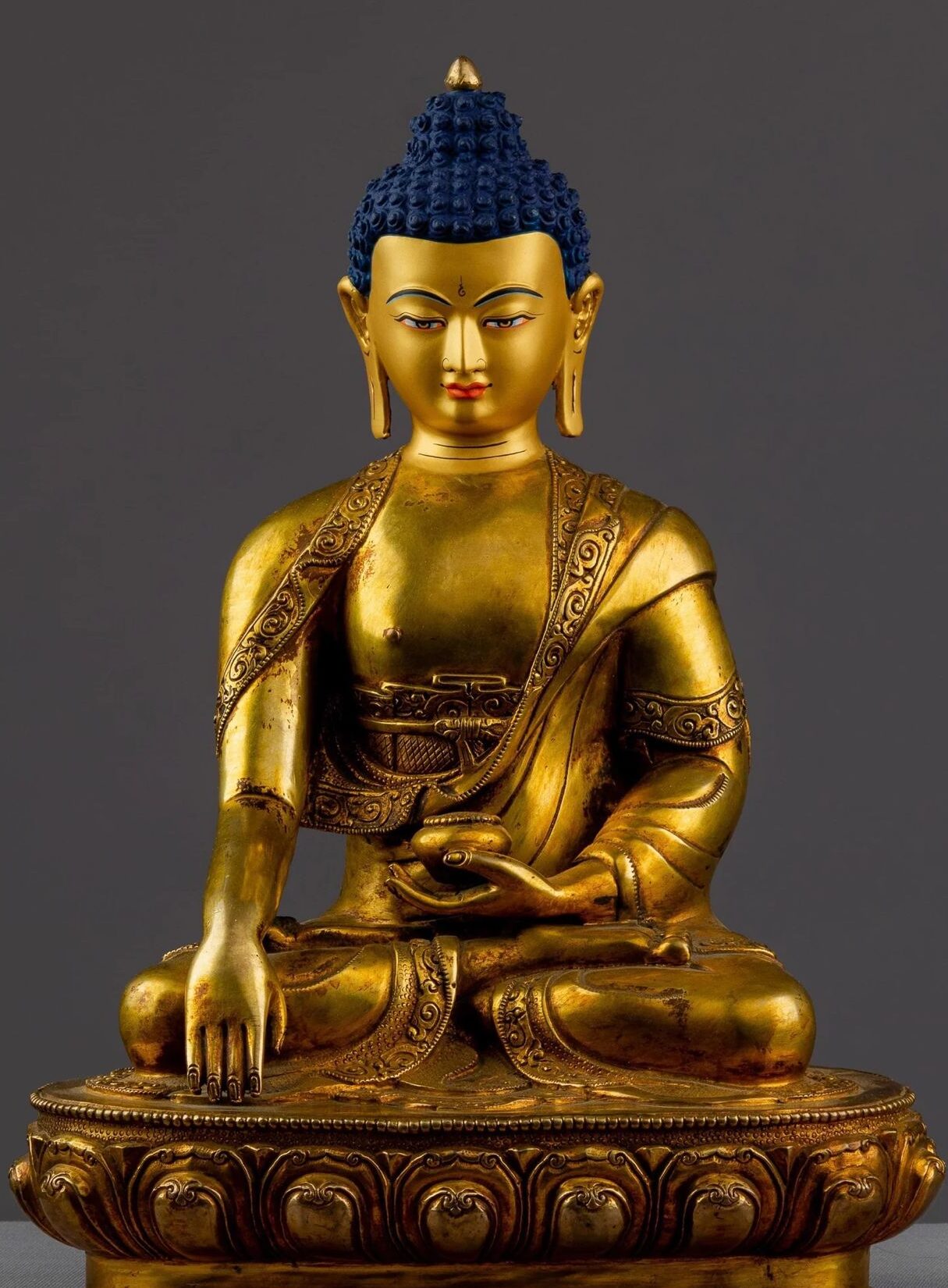
Buddhism originated with Siddhartha Gautama, who was born a prince but later renounced his royal life to seek enlightenment. After attaining enlightenment at the age of 35, he became known as the Buddha, the Awakened One, and dedicated 45 years to teaching the Dharma, offering 84,000 different teachings to guide sentient beings toward liberation.
Buddha was born in Lumbini, Nepal, in 563 BCE into a royal family. His father, King Suddhodana, and his mother, Queen Maya Devi, named him Siddhartha Gautama. At the age of 16, he married Yashodhara, and they had a son named Rahula. At 29, he renounced his princely life and practiced unwavering meditation for six years. At 35, he attained enlightenment and began teaching. He passed away at 80, entering Parinirvana.
Buddha’s teachings were structured and systematic, beginning with the Four Noble Truths, the principle of interdependent origination, and the fundamental nature of emptiness. His teachings culminated in the Great Perfection (Dzogchen), which reveals the luminous nature of the mind.
Buddha’s teachings are categorized into three vehicles: Hinayana, Mahayana, and Vajrayana. Practitioners can choose a path based on their understanding and temperament.